


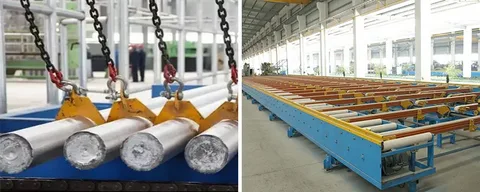
Aluminium rods are widely used across industries due to their excellent strength-to-weight ratio, corrosion resistance, and versatility. From construction and electrical applications to automotive and aerospace components, aluminium rods play a vital role in modern manufacturing. In this article, Aluminium Rod Explained: Properties, Grades, and Key Benefits will help you understand what makes this material so valuable and how to choose the right type for your needs.
What Is an Aluminium Rod?
An aluminium rod is a solid cylindrical product manufactured through extrusion, rolling, or casting processes. These rods are available in various diameters, lengths, and alloy compositions to suit different industrial and commercial requirements. Aluminium rods are known for their lightweight nature while still offering impressive mechanical performance.
Key Properties of Aluminium Rods
Understanding the properties of aluminium rods helps explain why they are preferred over many other metals.
Lightweight and High Strength
Aluminium rods are significantly lighter than steel, making them ideal for applications where weight reduction is critical. Despite being lightweight, they offer excellent strength, especially when alloyed with elements such as magnesium or silicon.
Corrosion Resistance
Aluminium naturally forms a protective oxide layer when exposed to air, which prevents rust and corrosion. This makes aluminium rods suitable for outdoor and marine environments.
Excellent Conductivity
Aluminium rods offer good electrical and thermal conductivity, making them a popular choice in electrical and heat transfer applications.
Easy Machinability
Aluminium is easy to cut, weld, and machine, reducing manufacturing time and cost.
Common Grades of Aluminium Rods
Different aluminium rod grades are designed to meet specific performance requirements. Below are some commonly used grades.
1. 6061 Aluminium Rod
This is one of the most widely used aluminium alloys. It offers a great balance of strength, corrosion resistance, and machinability. It is commonly used in structural components, automotive parts, and frames.
2. 6063 Aluminium Rod
Known for its excellent surface finish, this grade is often used in architectural and decorative applications. It has good corrosion resistance but slightly lower strength than 6061.
3. 2024 Aluminium Rod
This grade provides high strength and fatigue resistance, making it suitable for aerospace applications. However, it has lower corrosion resistance compared to other grades.
4. 7075 Aluminium Rod
One of the strongest aluminium alloys available, 7075 is used in high-performance applications such as aircraft structures and military equipment.
When considering Aluminium Rod Explained: Properties, Grades, and Key Benefits, choosing the right grade is essential to ensure optimal performance and durability.
Key Benefits of Using Aluminium Rods
Cost-Effective Solution
Aluminium rods provide long-term value due to their durability, low maintenance requirements, and recyclability.
Environmentally Friendly
Aluminium is 100% recyclable without losing its properties, making it a sustainable material choice.
Wide Range of Applications
Aluminium rods are used in construction, electrical transmission, automotive parts, machinery, furniture, and aerospace industries.
Design Flexibility
Their ease of fabrication allows manufacturers to create complex shapes and customized solutions.
Applications of Aluminium Rods
Aluminium rods are used in various sectors, including:
-
Electrical conductors and bus bars
-
Automotive and transportation components
-
Structural frameworks and supports
-
Industrial machinery parts
-
Aerospace and marine applications
This wide usability further supports the importance of Aluminium Rod Explained: Properties, Grades, and Key Benefits for engineers and manufacturers alike.
Conclusion
Aluminium rods combine lightweight performance, strength, corrosion resistance, and cost efficiency, making them an essential material across multiple industries. By understanding their properties and grades, businesses can select the right aluminium rod for their specific applications. As discussed in Aluminium Rod Explained: Properties, Grades, and Key Benefits, this versatile material continues to be a reliable and sustainable choice for modern engineering and manufacturing needs.
