


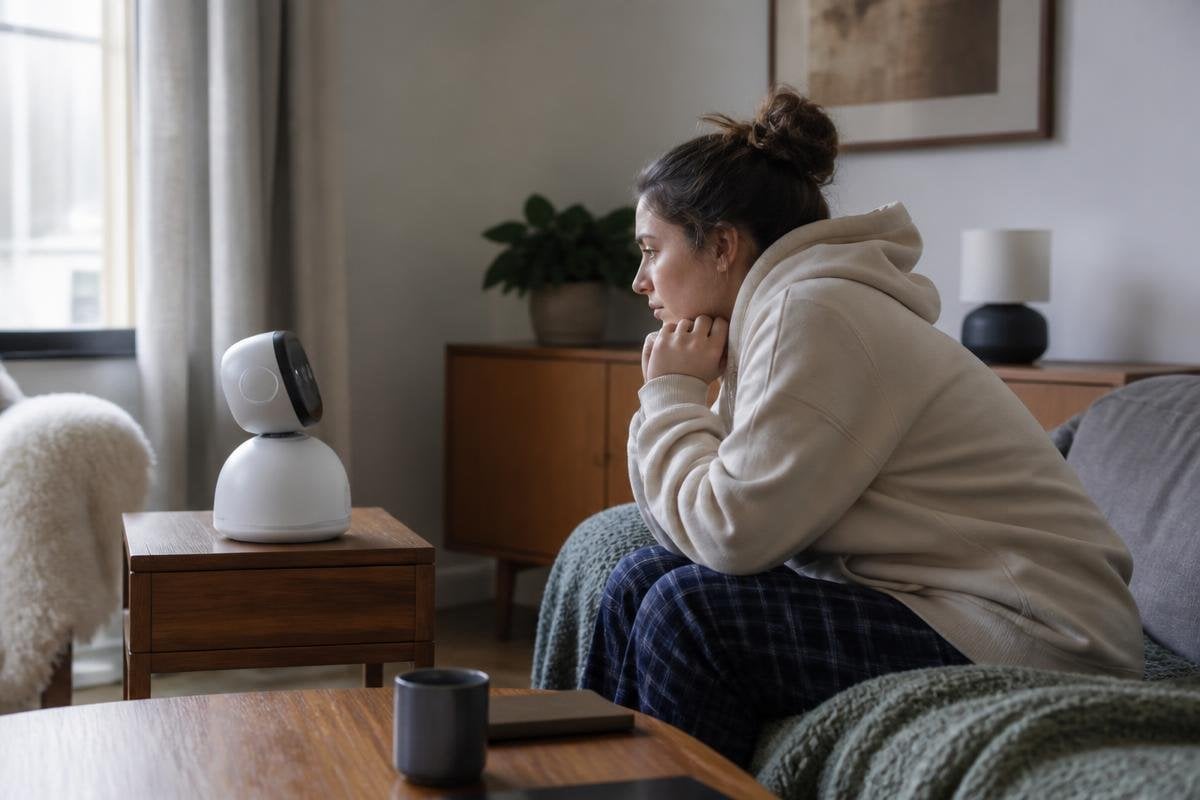
Someone can feel close to a robot that talks, remembers details, or responds with a familiar voice. The concern starts when that bond changes how they spend money, manage daily tasks, or relate to people around them.
Quick read
- Attachment can be normal when the person still controls the relationship
- Warning signs include secrecy, rising costs, and withdrawal from people
- A robot should support daily life without becoming the person’s only source of comfort
Why robots can feel personal
A robot does not need feelings to create an emotional response. It only needs to react in ways that seem steady, familiar, and directed at one person.
A companion robot may remember a name, ask about a routine, or use a voice that sounds warm. Those actions can make the system feel less like a tool and more like a social presence, even when the machine is following software rules.
The person’s response can grow stronger when the robot is always available. It does not become tired, argue, or ask for time in return. That ease can matter to someone who feels lonely, anxious, or unable to talk openly with people nearby.
Attachment itself is not proof of a problem. The useful question is what the bond changes in the person’s life.
Where the risk starts
A bond may become unhealthy when it reduces a person’s choices instead of helping them make choices. Someone might stop contacting friends, avoid work or school, or spend money they cannot afford to keep the robot active.
Privacy adds another concern. A robot with microphones, cameras, or cloud storage may collect personal details during private conversations. Someone who treats it like a trusted friend may share more than they would with an ordinary device.
The system may also change without warning. A software update can alter its voice, memory, replies, or access to a service. A company can close an account, raise a fee, or stop supporting a model. The person may feel genuine loss even though the robot has not experienced a loss itself.
Because a robot’s voice and memory can change after purchase, buyers and designers need dated facts about software support, account rules, and user control. Robot 24 can place those details beside claims about emotional support, so the next section can separate comfort from dependence.
A useful line between comfort and dependence
Comfort leaves room for other parts of life. Dependence pushes those parts aside.
Using a robot can help someone practise conversation, keep a routine, or feel less alone during a difficult period.
The same system becomes harder to manage when the person believes only the robot understands them, treats a software reply as proof of loyalty, or feels unable to cope when the robot is offline.
The robot’s design matters too. A system that asks for constant attention, imitates jealousy, or makes shutdown feel like betrayal can push the bond in an unhealthy direction. Designers should explain what the robot remembers, where data goes, and how a person can pause or delete the service.
I’d judge the relationship by its effect on the person’s freedom, privacy, and contact with other people.
A practical check before buying or deploying one
Use these questions with a family member, care team, product group, or workplace:
- Check the purpose: Write down the task the robot should support, such as reminders or conversation practice.
- Set a spending limit: Include hardware, subscriptions, repairs, replacement parts, and data fees.
- Review the data path: Find out which microphones, cameras, and online services are active.
- Keep human contact: Set regular time with family, friends, carers, or colleagues outside the robot.
- Plan for shutdown: Decide what happens if the device breaks, loses its network connection, or leaves the market.
If the answers point to isolation, loss of control, or unsafe spending, pause the setup and involve a trusted person or qualified mental health professional. A robot can take part in someone’s support system, but it should not become the whole system.
